
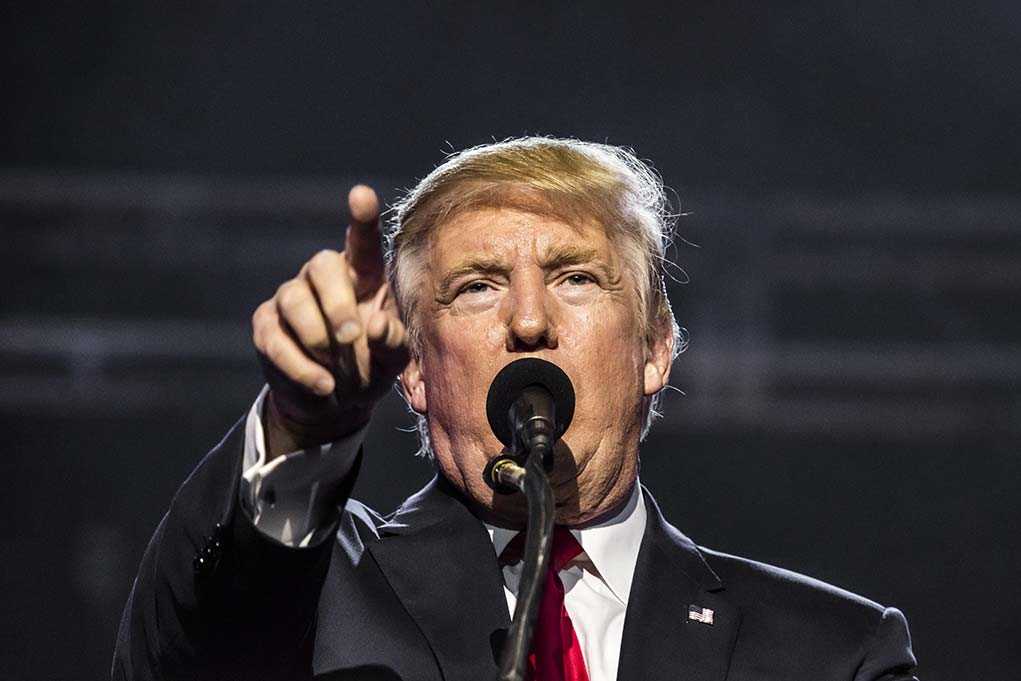
Category: Poll Results

  • Poll Results: Do you approve of President Trump’s Current Job Performance?

    Poll Results: Do you approve of President Trump’s Current Job Performance?

    Poll Results

    YES: 79%  |  NO: 21%

    In a time when headlines change by the hour and scandals seem to erupt weekly, one question keeps cutting through the noise: How’s Trump really doing this time around?

    Supporters are fired up. Critics are just as loud. But for millions of Americans, the answer isn’t coming from pundits — it’s coming from real-world results.

    Let’s lay it out plainly.

    What’s Working

    Supporters of President Trump say this term is delivering in ways that matter. The border? Being secured. ICE arrests are up. Cartel activity is being aggressively targeted. Catch-and-release is over.

    The economy? Recovering. Inflation is cooling. The dollar is stabilizing. Small business optimism is returning after years of uncertainty under Democrat leadership.

    Energy? We’re finally back to pushing American oil and gas. Drilling is expanding. Fuel costs are inching back down. OPEC’s grip? Loosening.

    And on the world stage, Trump is once again projecting strength — confronting China, holding NATO accountable, and refusing to play nice with bad actors.

    What Critics Say

    Of course, not everyone’s cheering. The media continues to hammer Trump’s tone and tactics. Bureaucrats complain that the pace is too fast, too aggressive. And Democrats say the policies are too divisive to unite the country.

    Some say Trump governs with a sledgehammer. Others argue that’s exactly what’s needed after years of administrative rot and weak leadership.

    There are also concerns about legal distractions, investigations, and political chaos — although many on the right see those as politically motivated attacks rather than legitimate obstacles.

    The Big Picture

    Here’s the truth: No president in modern history has faced the kind of nonstop resistance Trump has. And yet, he keeps pressing forward.

    His supporters don’t expect perfection — they expect fight. And that’s exactly what they feel they’re getting. Whether it’s the DOJ, the media, the swamp, or global elites — Trump is punching back.

  • Poll Results: Is the U.S. Currently Heading in the Right Direction?

    Poll Results: Is the U.S. Currently Heading in the Right Direction?

    Poll Results

    YES: 82% | NO: 18%

    Is the U.S. Headed in the Right Direction?

    Let’s be honest — ask ten Americans this question and you’ll get ten different answers. Some will say things are looking up. Others will tell you we’ve completely lost our way. But one thing is clear: this country is at a crossroads, and people are paying attention like never before.

    So where are we headed? Let’s break it down.

    The Case for Optimism

    There are folks who say America’s finally back on its feet. Inflation is easing, the markets are recovering, and law enforcement is regaining strength after years of demoralization. Crime rates in some cities are showing signs of leveling off, and the Trump administration is pushing hard on restoring order at the border and reasserting American energy independence.

    Supporters of the current direction point to real leadership returning to Washington — someone who doesn’t bow to global elites or pretend the world is fine while it’s burning. They see strength, clarity, and a renewed commitment to putting America first again.

    They believe the country is course-correcting after years of overreach, wokeness, and reckless spending.

    But Not Everyone’s Convinced

    A growing number of Americans say what they see feels more like controlled chaos than a comeback.

    They see too much change, too fast — with foundational norms being rewritten seemingly overnight. From the economy to education, from foreign policy to social values, there’s a sense that traditional America is being overrun by progressive overreach.

    Even with Trump back in the White House, deep state resistance and institutional drag continue to choke off real reform. Crime remains high in many areas. Prices are still punishing working families. And the cultural divide? Wider than ever.

    They also worry that confidence in our institutions is crumbling — and that no amount of talking points will fix that.

    A Nation Divided – And Tired

    One thing both sides agree on: people are exhausted. Tired of the shouting. Tired of the lies. Tired of feeling like the rules are being rewritten behind closed doors by people who never asked for their vote.

    Whether it’s the economy, the border, crime, energy, or foreign entanglements — the stakes feel higher now. Voters want clarity. Direction. And above all else, results.

    Where This Leaves Us

    America may be the greatest nation on earth — but right now, it’s a nation on edge. Some believe we’re turning the ship around. Others think we’re accelerating toward a cliff.

    Which side of that line you fall on says everything about what matters most to you.

    So we’re asking: Are we headed in the right direction… or are we still lost in the weeds?

  • Poll Results: Should Transgender Female Athletes (Male at birth) be allowed in Women’s Sports?

    Poll Results: Should Transgender Female Athletes (Male at birth) be allowed in Women’s Sports?

    Poll Results

    YES: 8%  |  NO: 92%

    Should Transgender Female Athletes (Born Male) Compete in Women’s Sports?

    It’s become one of the most emotionally charged questions in America today: Should biological males be allowed to compete in women’s sports just because they identify as female? Depending on who you ask, it’s either the next step in civil rights — or the end of fairness in competition.

    This issue has hit everything from high school track meets to Olympic podiums. And it’s not just some abstract culture war — it’s impacting real athletes, real careers, and the future of women’s sports.

    The Argument for Inclusion

    Supporters argue that transgender athletes deserve the same access and opportunity to participate as anyone else. They claim banning trans athletes from competing in the category they identify with is discriminatory and damaging to mental health. They point to hormone therapy and medical transition as proof that physical advantages can be reduced over time.

    They often cite fairness as going both ways: if a trans female meets the eligibility standards set by the governing body (like testosterone levels), she should be allowed to compete. The goal, they argue, is not domination — it’s dignity.

    The Case Against It

    But critics — including a growing number of coaches, athletes, and parents — say this isn’t about inclusion, it’s about erasure.

    They argue that biology matters. And no amount of hormone therapy can undo the physical advantages of male puberty: lung capacity, bone density, muscle mass, grip strength, and more. Those aren’t just performance perks — they’re game changers.

    The concern isn’t abstract. We’ve seen transgender athletes dominating women’s podiums, breaking records, and pushing out biological women who’ve trained their entire lives for a shot at the top.

    This isn’t just about fairness in sports — it’s about the message we’re sending to young girls: that they have to compete under rules that weren’t made for their bodies. And that no amount of hard work will matter if the playing field isn’t level.

    What’s Happening Politically

    Conservative states across the country have stepped in, passing laws to protect women’s sports by defining participation by biological sex. Meanwhile, the Biden administration has tried to push Title IX interpretations that open the door to broader inclusion of trans athletes in girls’ and women’s categories — though they’ve hesitated to apply it to contact sports like football and wrestling.

    President Trump and Republican leaders have come out strong against allowing biological males in women’s sports, framing it as an attack on common sense and basic fairness.

    What It All Comes Down To

    This debate touches on more than sports. It’s about science, fairness, gender, and truth. And for many Americans, it’s a line in the sand — not just politically, but morally.

    The question isn’t whether transgender individuals should be treated with respect — they should. The question is whether respect for one group means rewriting the rules and sacrificing the other.

  • Poll Results: Is the Trump Administration Stopping Illegal Immigration?

    Poll Results: Is the Trump Administration Stopping Illegal Immigration?

    Poll Results

    YES: 87%  |  NO: 13%

    Is the Trump Administration Stopping Illegal Immigration?

    President Trump’s second term has ushered in a series of aggressive immigration enforcement measures aimed at curbing illegal immigration. From reinstating policies to introducing new initiatives, the administration asserts that it’s making significant strides. But is it truly effective? Let’s delve into the details.

    The Administration’s Actions

    • Increased Arrests and Deportations: In the first 100 days of his second term, ICE reported over 66,000 arrests and nearly 66,000 deportations, including thousands of gang members and individuals with serious criminal convictions.
    • Revival of 287(g) Program: This program allows local law enforcement to collaborate with ICE, leading to a significant increase in local agencies participating in immigration enforcement.
    • “Project Homecoming” Initiative: Aimed at encouraging voluntary departures, this program offers incentives like cash stipends and travel assistance to undocumented immigrants willing to self-deport.
    • Crackdown on Sanctuary Cities: The Department of Justice has taken legal actions against sanctuary cities, compelling them to cooperate with federal immigration enforcement.

    Evaluating the Impact

    Pros:

    • Significant Drop in Border Crossings: Data indicates a sharp decline in illegal border crossings, with apprehensions in February 2025 dropping by 94% compared to the previous year.
    • Targeting Criminal Elements: The administration emphasizes the removal of individuals with criminal backgrounds, aiming to enhance public safety.

    Cons:

    • Resource Limitations: Despite ambitious goals, ICE faces challenges in meeting arrest targets due to staffing and resource constraints.
    • Humanitarian Concerns: Critics argue that some policies may overlook the complexities of individual cases, potentially leading to unjust outcomes.

    Conclusion

    The Trump administration’s approach to illegal immigration is marked by assertive policies and a clear message of enforcement. While there are indications of reduced illegal crossings and a focus on removing criminal elements, challenges persist in terms of resources and the nuanced realities of immigration.

  • Poll Results: Social Security for Illegal Immigrants

    Poll Results: Social Security for Illegal Immigrants

    Poll Results

    We polled thousands of Americans. SSI benefits come from Americans who have paid into it through long years of hard work. And, while Americans are happy to help those who help themselves, poll results show that they would prefer those benefits go to other Americans who have earned them or who suffer from a disability.

    One of the most common arguments is that illegals by default cannot get SSI, because they are illegal aliens and don’t have the social security numbers needed to claim SSI to begin with. We wish it was that easy.

    Anyone working in the US needs authorization to do so. In the US a Social Security Number (SSN) is a work authorization. However, an SSN is for American citizens only. Illegal aliens get a Individual Taxpayer Identification Number (ITIN), which looks just like an SSN, but states clearly that it isn’t to be used for the purposed of employment.

    This is a fairly recent law that most Americans don’t know about, and one which will go far to prevent some of the SSI exploitation we see today. This is the law that prevents anyone not authorized to work within the US from 2004 on from claiming Social Security benefits. Basically, anyone who worked in the US — even illegally — before 2004 can still claim SSI benefits.

    Another issue is sponsorship. Those who come here with a sponsor can file for Social Security benefits based on the status of their sponsor. It’s the sponsor’s income and not their own which is used to determine the amount and eligibility for SSI benefits. That means people who come here late in life could get SSI without ever having worked in America. It also means that children who were made naturalized citizens because they were born on American soil can become the sponsor of their parents. Those parent may then file for SSI benefits using their grown children as sponsors.

    93% of Americans DO NOT think illegal immigrants should get Social Security benefits.
    7% of Americans DO think illegal immigrants should get Social Security benefits.

    So far, 93% of Americans polled do NOT think illegal immigrants should be eligible for Social Security Benefits. Just 7% of Americans are willing to share their Social Security with those who come into America illegally.